


- Gallery
- Includes & Excludes
- Itinerary
- Diving Highlights
- Liveaboard Details
- Destination Information


Includes:
- Airport Transfers
- 7 Nights’ | 8 Days’ Aboard the Humboldt Explorer
- Up to 4 Dives Daily (weather permitting)
- Breakfast, Lunch & Dinner Daily
- Snacks & Refreshments
- Local Beer & Wine
- Non-alcoholic Beverages
- Towels & Linens
- Tanks & Weights
- Airfills
- Free Internet
- Shore Visits
Excludes:
- All Flights & Airport Taxes
- Dive Instruction & Retails Sales
- Dive Gear
- Crew Gratuities
- Travel & Dive Insurance
- Premium Alcoholic Beverages
- Galapagos National Park Tax: $200 per person (Cash Only)
- Tourism Transit Card: $20 per person (Cash Only)
- Nitrox: $150 per person
- Fuel Tax: $150 per person
Where is Galapagos?
The Galapagos Islands are located 1000km off the Ecuador coastline in the Pacific Ocean.
Itineraries
Day 1
Date : February 1, 2027
Arrive Baltra
Guests fly to the Galapagos Islands from Mainland Ecuador, arriving in the late morning. The dive guides will meet the guests at the airport and escort them to the Humboldt Explorer. Guests will board the vessel after 1:00pm, have lunch, organize equipment and listen to the safety briefings.
Day 2
Date : February 2, 2027
Baltra North (Equipment Check - 2 Dives)
Equipment check, 7:00 and 10:00 dives Sightings include rays and schools of fish.
Afternoon North Seymour land visit. Walk the path around North Seymour. to see the large colonies of Blue Footed Boobies and Frigate Birds. Sighting of Sea Lions and Marine Iguanas are also common. Depart for Northern Islands. (16+ hour transit).
Day 3
Date : February 3, 2027
Wolf Island (3-4 dives)
6:30, 10:30, 2:00 and 4:30 dives. (4 dives). Possible night dive. Sightings often include hammerheads, whale sharks, eagle rays, sea lions, Galapagos sharks and silky sharks. Night anchor at Wolf Island.
Day 4
Date : February 4, 2027
Wolf Island (2 dives)/Transit to Darwin Island ( 2 dives)
Wolf 6:30 and 9:30 dives (2 dives) Transit to Darwin Island 2:00 and 4:30 dives (2 dives) Sightings often include hammerheads, red-lipped batfish, eagle rays, sea lions, Galapagos sharks and silky sharks.
Day 5
Date : February 5, 2027
Darwin Island (4 dives)
6:30, 10:30, 2:00 and 4:30 dives (4 dives) Sightings often include hammerheads, whale sharks (in season) eagle rays, Galapagos sharks and silky sharks. Transit to Wolf Island.
Day 6
Date : February 6, 2027
Wolf Island (3 dives)
6:30, 9:00 and 11:00 dives (3 dives) Sightings often include hammerheads, whale sharks (in season), eagle rays, Galapagos sharks and silky sharks. Long transit to Cousin’s Rock (20+ hours).
Day 7
Date : February 7, 2027
Cousin´s Rock (1-2 dives) / Santa Cruz: Highlands
6:30 and 9:30 dives (number of dives dependent on travel time from Wolf Island) This is a great macro diving with an excellent chance of seeing sea horses, sea lions and eagle rays.
Lunch will be served while transiting to Santa Cruz (3 hours). Travel by bus to the Santa Cruz Highlands to visit the giant tortoises in their natural habitat. Visit the town of Puerto Ayora and the Darwin Centre on your own. Dinner on your own in Puerto Ayora. Return to the Humboldt Explorer at 8:30pm.
Day 8
Date : February 8, 2027
Depart Baltra
Depart the vessel by 9:00 am. Transfer to the Airport. Flight to Mainland.
The Galapagos Islands are located 1000km off the Ecuador coastline in the Pacific Ocean and is known for the volcanic landscapes, pristine beaches and wildlife found like nowhere else in the world.
Diving Highlights
- Sharks - Galapagos sharks, silky & black tips, hammerheads, whale sharks & more
- Rays - Manta, mobula rays, eagle rays, marbled rays
- Sea Lions & Fur Seals
- Dolphins & Galapagos Penguins
- Gigantic Schools s of game fish - tuna, jack, snapper & barracuda
- Colourful reef fish, huge eels, critters, endemic species such as the red-lipped bat fish & Galapagos horn-sharks
- Birds - Blue-footed boobies, red-footed boobies, giant tortoises, brown pelicans, frigate birds and flightless cormorants
Humboldt Explorer
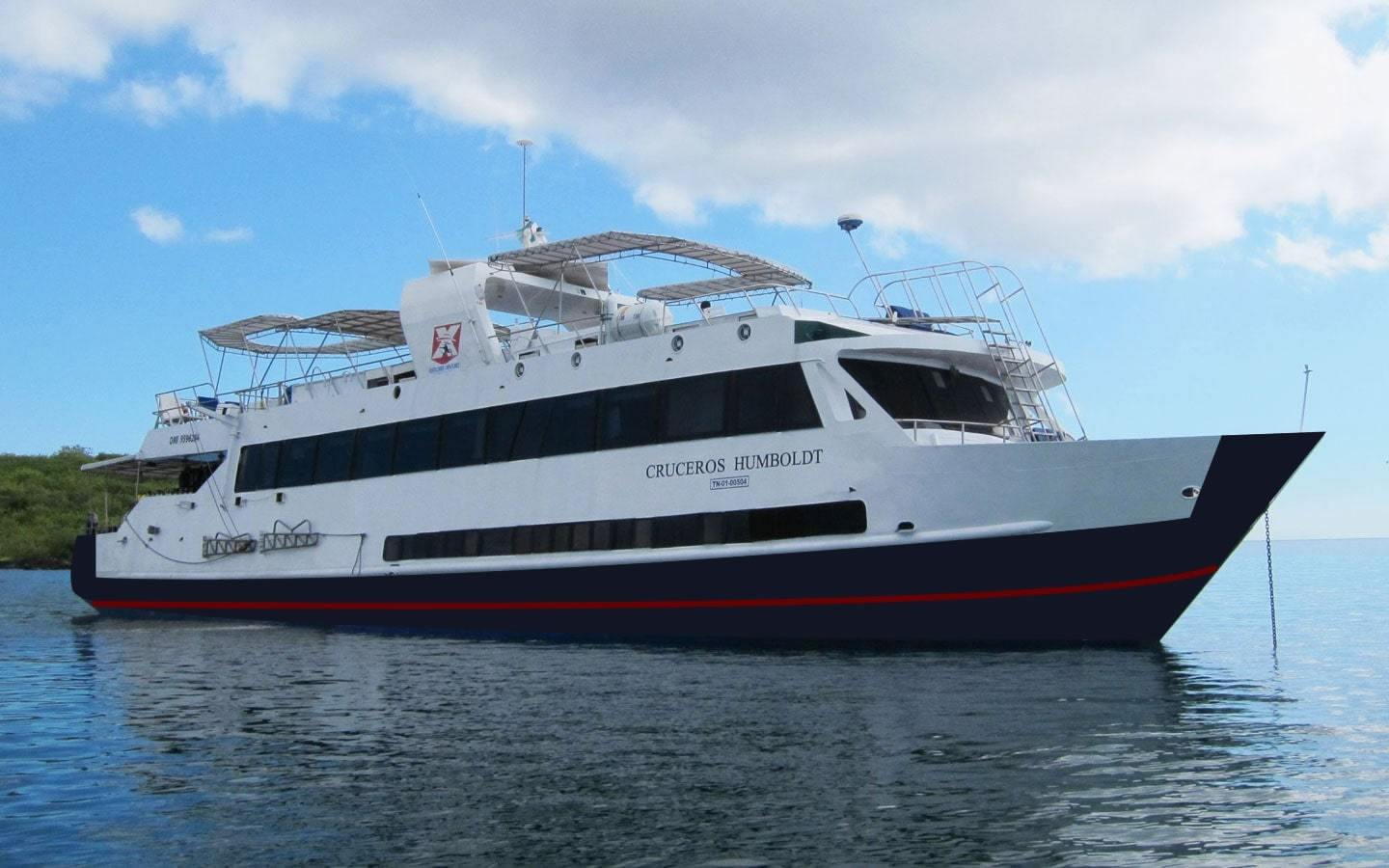
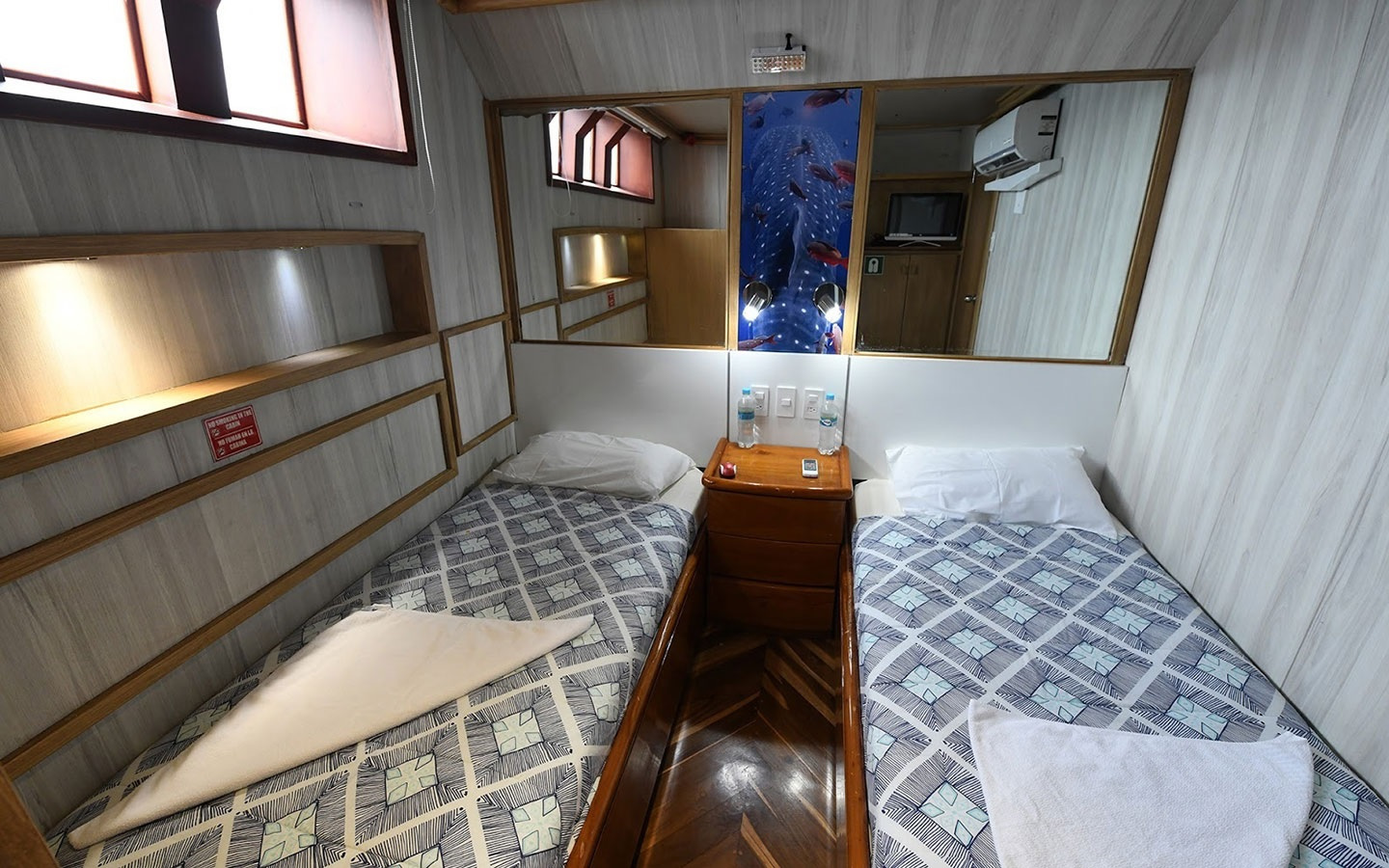
- Humboldt Explorer accommodates 16 passengers in 8 air-conditioned rooms, all of which have private bath and shower facilities. Most cabins can be arranged to provide two twin beds or one large bed depending on guest needs. Cabins are located on the main and lower decks.
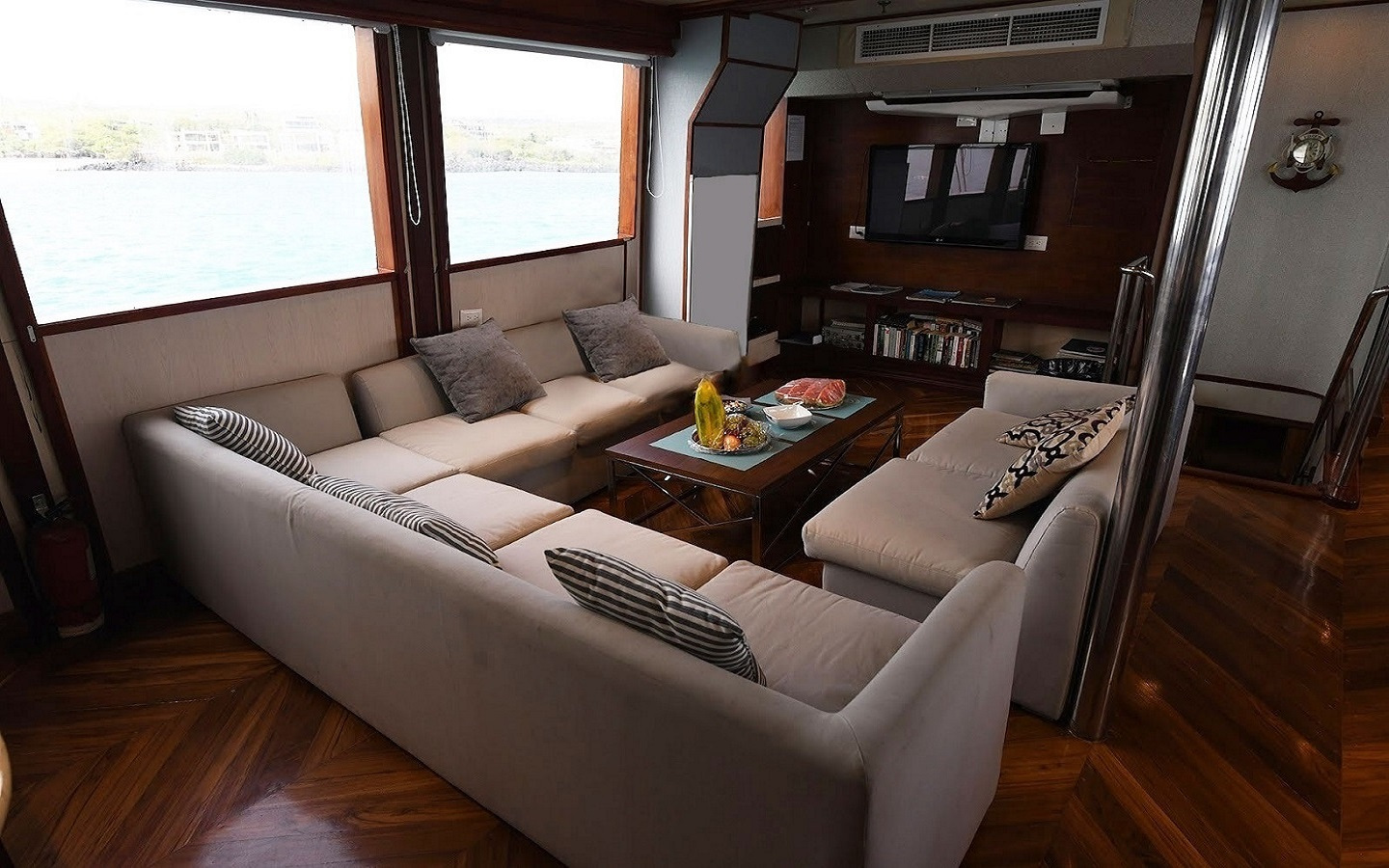
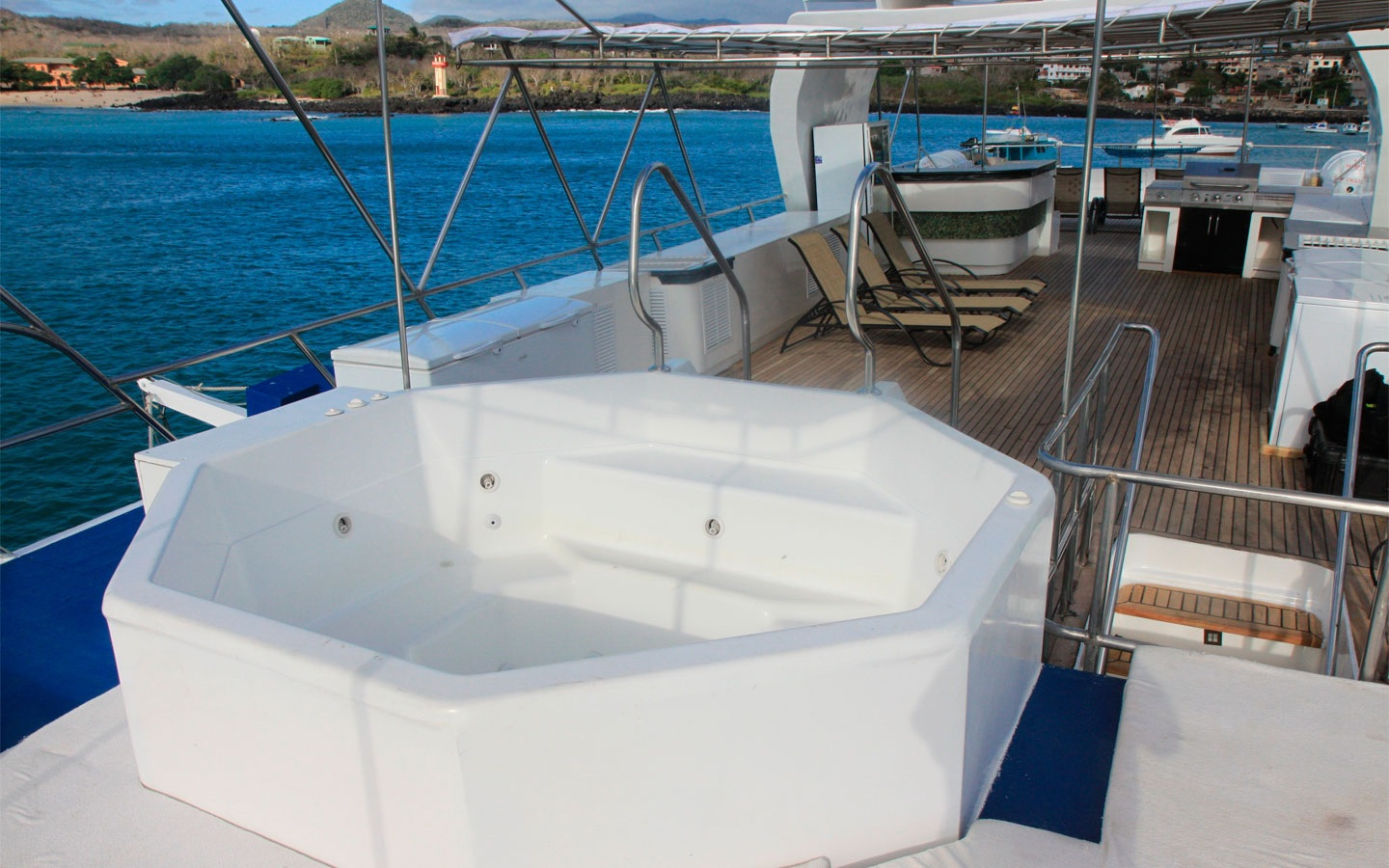
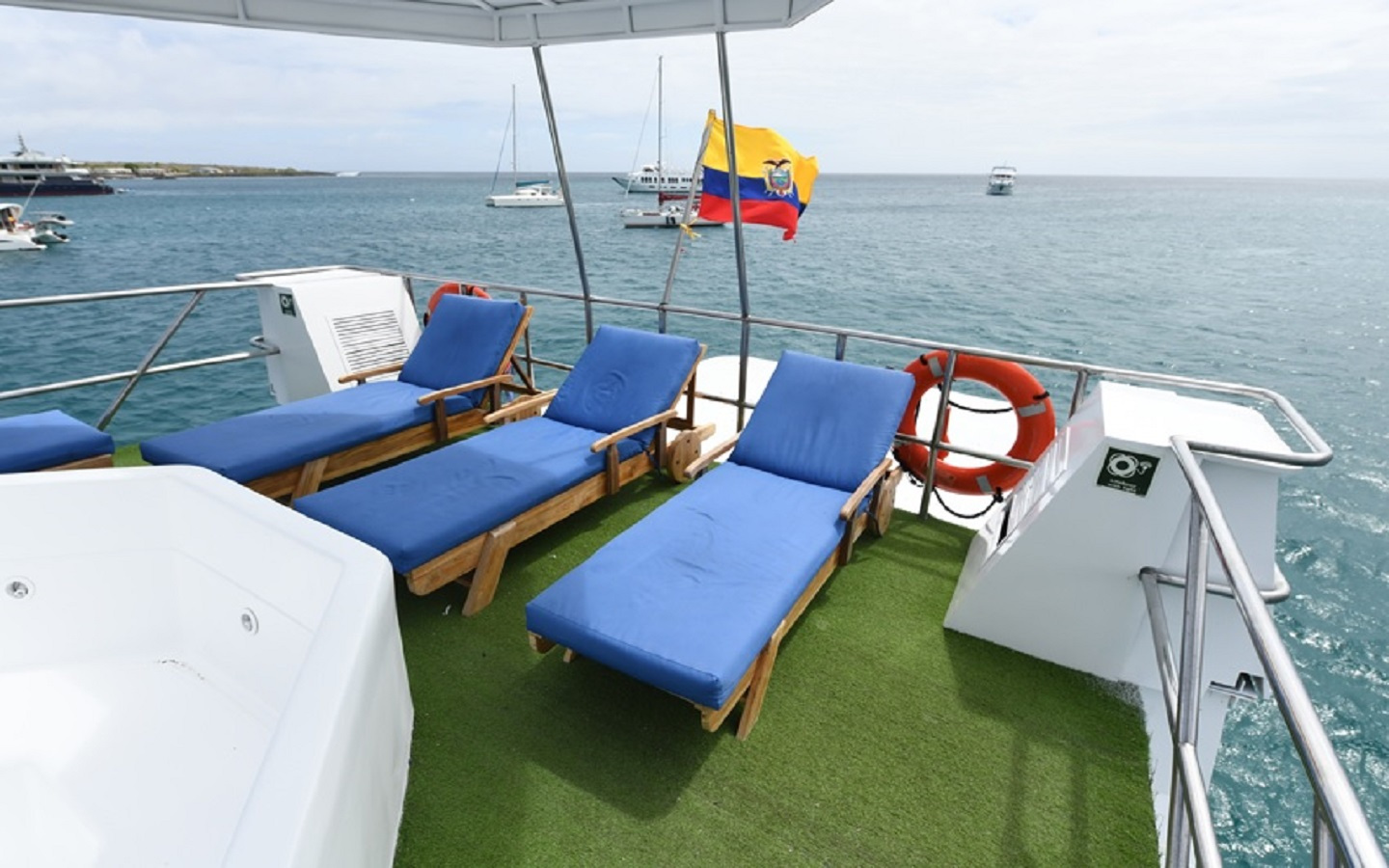
- The air-conditioned salon on the main deck includes dining tables, bar, TV, CD/DVD, video library and lounge area. A partially covered sundeck with jacuzzi and ample seating areas is located on the top level.
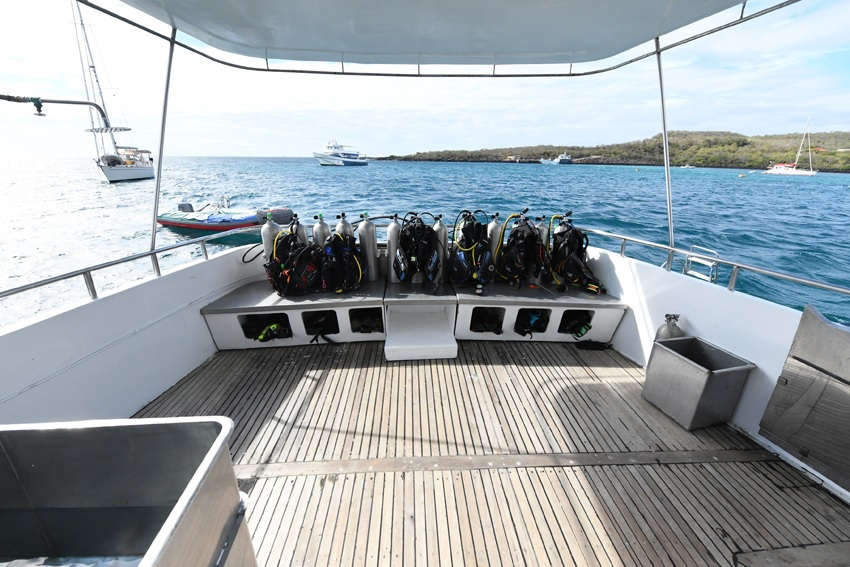
- The dive deck is equipped with individual gear bins, large camera table, recharging station, air and nitrox filling stations, tank racks, and a separate fresh water rinse tank for underwater camera equipment. Diving operations are conducted from two large pangas (tenders) easily boarded from the dive deck.
SUN DECK:
- The sun deck features a large lounge area, and a hot tub with ample seating.
MAIN DECK:
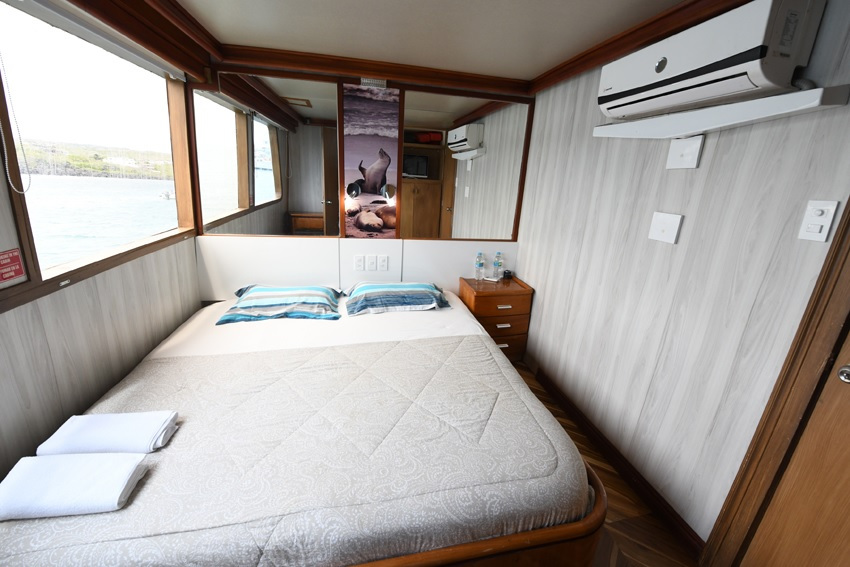
- The main deck features 2 guest cabins, each with private bath and shower, 1 queen or 2 twin beds, television and ocean view. The main deck contains the dining area and dive deck.
LOWER DECK:
- The lower deck comprises of 6 cabins, each with private bath and shower, television and windows. 2 Cabins have twin beds, while the other 4 have twin beds or 1 queen bed.

Language
The official language is Spanish, but English is spoken nearly everywhere
Time zone
South Africa is 8 hours ahead of Baltra, Ecuador and 7 hours ahead of Guayaquil, Ecuador
VISA
South African passport holders do not require a tourist visa to visit Ecuador for a period of up to 90 days
Please double check visa requirements for countries you may be flying through.
Climate
Galapagos is on the Equator but the weather is not tropical. Temperatures range from 21°-30°C. The warmer season is from January to June.
Water temperature
Average temperature in Pacific Ocean in Galapagos Islands is a comfortable 25.0°C
Power supply
110 V AC power (US-style outlets). It is highly recommended to carry a travel adaptor.
inoculations
The only compulsory inoculation for Galapagos, Ecuador is Yellow Fever if traveling from a country with risk of YF virus transmission.
Staying in contact
Outgoing calls may be made from the vessel via satellite phone. Please be aware that a charge is assessed for both incoming and outgoing calls.
- Vital messages may be passed to guests by calling the booking office at 1-800-322-3577
The local agent for Humboldt Explorer can be reached from North America via phone at 011-593-958720537, and will be able to contact the vessel. Cellular phone calls and internet access are available when in proximity to some of the islands if your phone is so equipped. Internet cards/access and cellular phone cards are available for purchase at the airport. The connections are based on 3G network and are good for basic emails but not fast enough for large downloads. The vessel’s location does determine the reliability of access to the internet.
currency
The U.S. dollar is the official currency of Ecuador. Most major credit cards are accepted widely when shopping ashore, however, additional fees are charged in Ecuador for their use.
What payment method is accepted
Though all meals, most beverages, transportation within the Galapagos, and much more is included in your trip payment, there are additional items which you may charge to your on-board bill. These include retail items (shirts, etc.), scuba instruction, rentals, nitrox, premium alcoholic beverages, incoming and outgoing telephone calls, and crew gratuities. Other required fees include:
- Upon entry to the Galapagos Islands: Per person cash payments of $200 Galapagos National Park fee and $20 Tourist Card.
Bills will be settled onboard on Sunday morning. Accumulated charges may be paid using cash, Visa, or MasterCard. American Express, travelers checks and personal checks are not accepted on board, and we are unable to advance cash on credit card charges. (Travelers checks are not accepted in Ecuador nor can they easily be changed into cash.) US Dollars larger than $20 are preferred onboard. $50 and $100 bills are not accepted widely in Ecuador. Credit cards are subject to 6% in bank fees. These charges can be avoided by using cash for onboard charges. ATM machines are available in Quito, Guayaquil and Puerto Ayora.
Crew Gratuities
Crew gratuities are not included in your package. The crew works very hard, 7 days a week and many weeks at a stretch to provide the best possible service for our guests. The industry standard for crew gratuities on dive trips is between 10% and 15% of the regular package price per passenger.
What to bring
Packing for a liveaboard trip is much easier than packing for a land-based vacation. The climate doesn’t require much more than shorts, T-shirts, and swimsuits, though at sea the winds can be cold and jackets are often necessary. Sunglasses, a visor/hat, raincoat, lightweight sweater or jacket, long sleeved shirt, backpack, tevas (or similar) are recommended. Soft luggage is also recommended as it takes up very little space when empty. Guests traveling through Quito who are interested in day tours may wish to bring some items of clothing for slightly cooler temperatures and good walking shoes. Please remember that the Galapagos Islands straddle the Equator, and the sun can be very strong at times. For this reason, please make sure you have sufficient strength environmentally friendly sunscreen. In case of rough weather or if you have a tendency towards seasickness, come prepared with motion sickness medications or Transderm patches from your doctor. If you have favorite CD’s or DVD’s, feel free to bring them. All linens (including sheets, comforters, bath towels, hand towels, dive towels, and wash cloths) are provided on board.
If possible, pack your regulator, dive computer, mask, swimsuit, change of clothes, medications and toiletries in your carry-on bag. Having these few items with you will make an unexpected luggage delay far more bearable.
There is a checked luggage limit of one bag up to 23 kilos for flights between Quito and/or Guayaquil and the Galapagos. An additional fee will be charged for the second bag or overweight luggage. In addition, passengers are allowed a carry-on bag weighing no more than 8 kilos and a personal item. All additional luggage fees must be paid in cash at flight time.
What NOT to bring
-
Please plan carefully to minimise your rubbish. Whenever possible, choose rechargeable batteries and avoid bringing things like disposable razors and single use plastics.
diving
- Certification must be presented as well as a log book and dive insurance
- Safety: The Hyperbaric Facility in Ecuador’s Galapagos archipelago is operated by Protection Subaquatic del Ecuador, SA (Protesub), and is located in the town of Puerto Ayora on the island of Santa Cruz. Puerto Ayora is the largest town in the Galapagos (pop. 20,000), and is a central ‘crossroads’ to all of the islands, making it the logical centre for diving and medical emergencies. The facility is open 24 hours a day
- Please be sure that your dive insurance is comprehensive & up to date before departing on your diving trip.
- Always follow safe diving practices at all times.
- Environmental Awareness It is recommended to wear gloves to protect against barnacles on the boulders at Darwin and Wolf. No touching of animals is permitted
- Alcohol Consumption: If alcohol is consumed in between dives by an individual then they will be required to refrain from diving for the remainder of the day
- Flying After Diving: A minimum surface interval of 18 hours must be allowed prior to flying or going to altitude


